
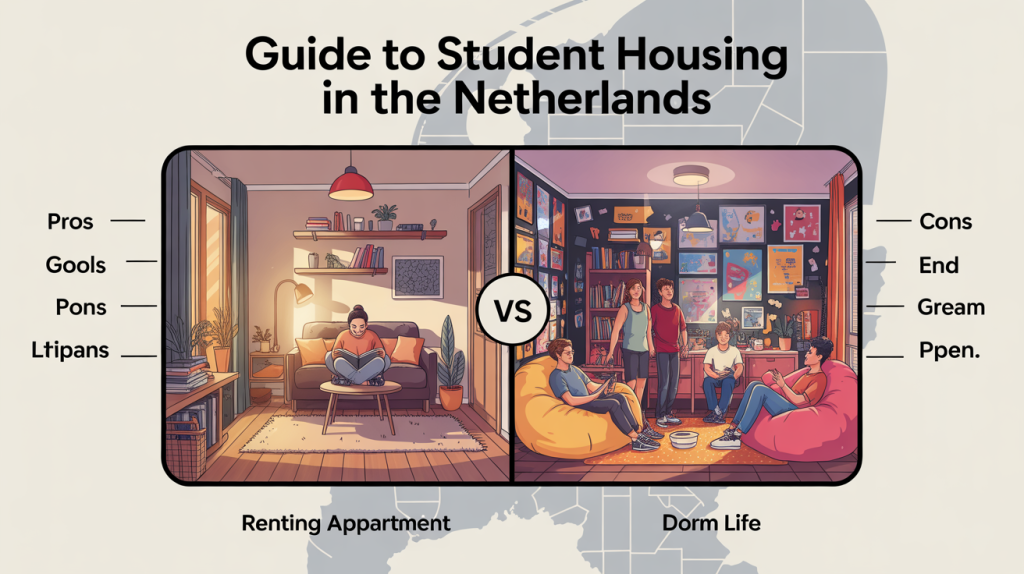
A Guide to Student Housing in the Netherlands: Renting vs. Dorm Life
Understanding Student Housing in the Netherlands
Most Dutch universities do not operate traditional campus dormitories. Instead, students typically find accommodation in various parts of the city where their university is located. This decentralized housing landscape offers flexibility but also presents challenges such as high demand and limited supply, especially in popular student cities like Amsterdam, Utrecht, and Groningen.
Key insight for international students: Begin your housing search as early as possible once you receive your admission offer to navigate intense competition and secure a suitable place in time.
Types of Student Housing in the Netherlands
Dorms (Student Residences/Halls)
Dutch student residences may be managed either by university-affiliated housing agencies or private providers. These residences usually consist of private or shared rooms within a building that includes communal facilities such as kitchens, bathrooms, and laundry areas.
Features of dorm life include:
- Social environment: Residences foster a strong sense of community, offering numerous opportunities to meet fellow students, participate in social events, and build networks that can support your academic and personal life.
- Location: Unlike traditional campus dormitories, these residences are spread across the city rather than located on or adjacent to university grounds.
- Availability: Placement in dorms is not guaranteed and depends on factors such as the city, university policies, and agreements with housing agencies.
Renting: Shared Apartments, Studios, and Private Rooms
Renting independently is the most common alternative to dorm life and offers diverse options:
- Shared apartments (“flats”): Students share rent and common areas like kitchens and bathrooms, balancing affordability with a shared living experience.
- Studios: These self-contained units offer more privacy with private kitchenettes and bathrooms, ideal for students who prefer independence.
- Rooms in Dutch family homes: An immersive choice for students eager to experience Dutch culture and language firsthand.
Students opting for private rentals usually manage their own utilities, internet, and other household expenses, which requires a higher degree of independence.
Renting vs. Dorm Life: A Comparative Overview
| Feature | Dorm Life (Student Residences) | Renting (Apartments/Studios/Rooms) |
|---|---|---|
| Social environment | High: easy to connect with other students through events and proximity | Varies: dependent on roommates and individual initiative |
| Facilities | Shared kitchens, bathrooms, and laundry facilities | Shared or private depending on property type |
| Privacy | Less, due to shared common areas | More, especially in studios or private rooms |
| Costs | Usually includes utilities in a single monthly fee | Utilities often excluded; costs vary by provider and usage |
| Flexibility | Sometimes limited by agency or university housing rules | Generally higher flexibility governed by rental contracts |
| Support | Assistance often available from university or housing agency | Independent; students must arrange their own support |
| Location | Distributed across city; close to student population | More varied; can select preferred neighborhoods |
Understanding these differences empowers international students and university admissions teams to tailor housing strategies that best support student needs.
Tips for Securing Student Housing in the Netherlands
Securing suitable accommodation can be competitive, but strategic planning helps. Here are essential tips for students, recruiters, and admissions professionals alike:
- Start early: Initiate your housing search immediately after admission to gain access to a broader range of options.
- Leverage university resources: Use international offices, official housing boards, or established partner agencies to find reliable listings and access support services.
- Be prepared for waiting lists: Housing scarcity in popular cities means students must sometimes wait or be open to alternative neighborhoods.
- Explore multiple housing types: Considering dorms, private rentals, or even family homes can provide richer living experiences depending on personal preferences and budgets.
How Study in Netherlands Supports Student Housing and Recruitment
At Study in Netherlands, we understand that housing is a vital element of the international student journey. We collaborate closely with university admissions teams and housing providers to streamline recruitment and placement efforts. Our platform offers:
- Integrated recruitment solutions that include housing information and support, ensuring students are well-informed from the outset.
- Expert guidance tailored for HR and marketing professionals in education to enhance international student engagement.
By bridging education, recruitment, and accommodation solutions, Study in Netherlands remains your authoritative partner in delivering seamless, high-quality international study experiences.
Conclusion
Choosing between renting and dorm life in the Netherlands hinges on individual priorities concerning social environment, privacy, cost, and flexibility. Dutch student housing is predominantly city-based rather than campus-centric, offering diverse opportunities to create a fulfilling student lifestyle.
For international students, early preparation, using trusted university resources, and exploring a wide range of housing options are essential strategies for success. Institutions and student recruitment agencies can leverage these insights to better support their applicants and enhance the overall educational journey.
Take the Next Step with Study in Netherlands
We encourage you to explore further and make informed decisions about your student housing options: