
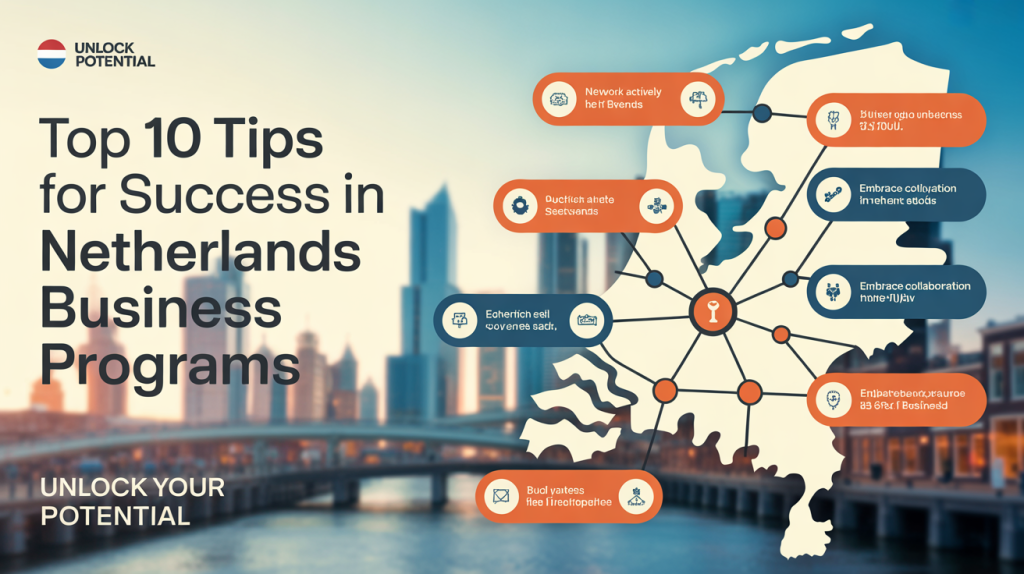
Top 10 Tips for Succeeding in Netherlands’s Business Programs
Master the Art of Networking
Develop Strong Communication Skills
Prepare for Interactive and Practical Learning
Stay Organized and Proactive
Seek Out Internship Opportunities
Take Advantage of University Resources
Learn About Dutch Business Culture
Focus on Sustainable and Innovative Thinking
Build Language Skills
Conclusion
Embrace an International and Open-Minded Perspective
At the heart of business education in the Netherlands is its multicultural and international environment. Students come from diverse backgrounds, creating a rich tapestry of perspectives and experiences.
Why it matters: Engaging actively with fellow students from various cultures promotes cross-cultural understanding and collaborative problem-solving skills.
Actionable advice: Encourage students to participate in group projects and discussions that challenge their viewpoints and foster open-mindedness.
Master the Art of Networking
Networking is a cornerstone of professional success and a core element of the Dutch business ecosystem.
Why it matters: Frequent networking events, guest lectures, and partnerships with multinational companies create opportunities that can lead to internships and full-time employment.
Actionable advice: Motivate students to build strong relationships with classmates, professors, and business professionals.
Develop Strong Communication Skills
Dutch business programs emphasize clear, direct, and open communication — skills essential for effective team collaboration and leadership.
Why it matters: The ability to articulate ideas confidently and listen actively enables students to contribute meaningfully to discussions and presentations.
Actionable advice: Provide training opportunities in public speaking and presentation skills. Encourage engagement in debates and dynamic group work.
Prepare for Interactive and Practical Learning
Business education in the Netherlands blends theory with hands-on practice through case studies, simulations, and real-world projects.
Why it matters: Practical learning bridges the gap between academic knowledge and workplace readiness.
Actionable advice: Foster a proactive attitude in students towards these projects, emphasizing goal-oriented approaches and critical thinking.
Stay Organized and Proactive
Effective time management and self-organization are critical to coping with the multi-faceted demands of business programs.
Why it matters: Assignments, group work, presentations, and exams often overlap, making meticulous planning indispensable.
Actionable advice: Encourage students to utilize digital calendars and task management apps to set realistic goals.
Seek Out Internship Opportunities
The Netherlands hosts a dynamic business landscape comprising multinational corporations and innovative startups.
Why it matters: Internships provide invaluable work experience, helping students apply theoretical knowledge while enhancing their CVs.
Actionable advice: Guide students in identifying and securing internships aligned with their career goals.
Take Advantage of University Resources
Dutch universities offer extensive resources designed to support student success.
Why it matters: Access to career counseling, academic advising, and extracurricular activities strengthens students’ learning pathways.
Actionable advice: Promote awareness of these services early in the academic journey. Encourage regular use of career centers.
Learn About Dutch Business Culture
Understanding local business customs can significantly enhance students’ academic and professional experiences.
Why it matters: Dutch culture values direct communication, punctuality, and a flat organizational hierarchy.
Actionable advice: Provide orientation sessions on Dutch business etiquette and cultural norms to help students adapt.
Focus on Sustainable and Innovative Thinking
The Dutch economy is a global leader in sustainability and innovation — themes deeply embedded in business education.
Why it matters: Staying informed about sustainable business practices and technological trends prepares students for the future workforce.
Actionable advice: Integrate sustainability topics into study plans and encourage participation in innovation-focused projects.
Build Language Skills
Although most business programs are delivered in English, learning Dutch broadens social and professional opportunities.
Why it matters: Basic Dutch language skills facilitate integration into daily life and foster stronger connections.
Actionable advice: Encourage enrollment in Dutch language courses and promote language exchange groups.
Conclusion
Success in the Netherlands’s business programs entails a blend of academic rigor, cultural adaptability, and practical experience. For recruiters, admissions teams, and educational agencies, staying informed about these success factors translates into better guidance and improved outcomes.
Take the Next Step with Study in Netherlands
Ready to elevate your international recruitment and student engagement strategies? Contact Study in Netherlands today to discover how our expertise can support your goals in international education.