
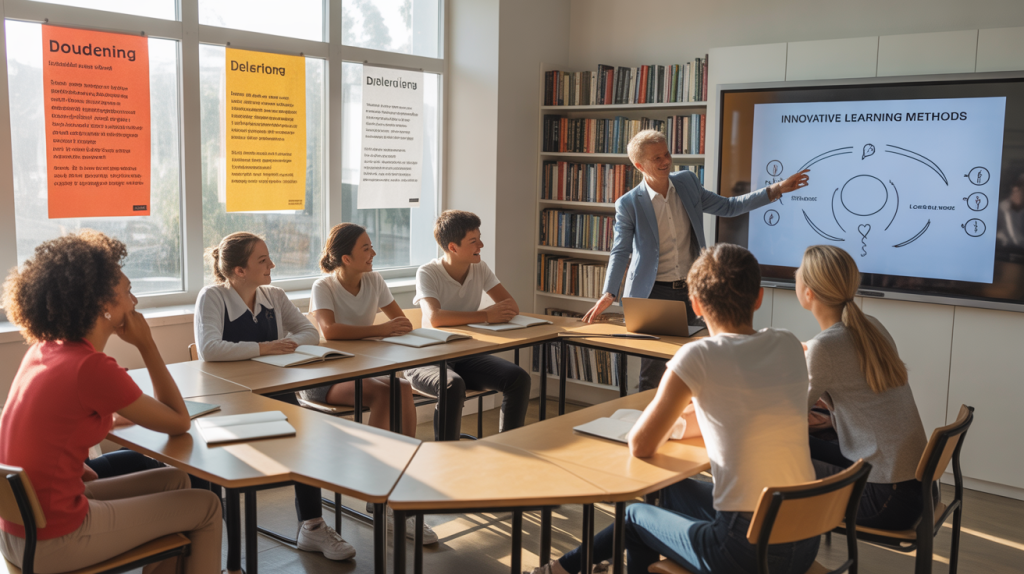
A Guide to Netherlands’s Innovative Learning Methods
Historical Foundation of Educational Innovation in the Netherlands
The commitment to innovative education in the Netherlands has deep roots. Since the founding of Maastricht University in 1976—the first in the country to implement problem-based learning—the Dutch higher education system has consistently embraced forward-thinking pedagogies. This tradition set a strong precedent for other institutions to follow, establishing the Netherlands as a pioneer in developing educational approaches that prioritize active learning and real-world application.
Understanding this history offers valuable context for educators, recruiters, and admissions professionals who aim to promote Dutch higher education’s strengths in innovation. The proven success of such approaches demonstrates the country’s commitment not only to high-quality teaching but also to preparing graduates for challenges in the global workforce.
Key Innovative Learning Methods in Dutch Universities
Dutch universities implement a range of innovative methods that shift the educational experience from passive reception to engaged, active learning. These methods have been widely studied and recognized for their effectiveness, making the Netherlands a prime destination for international students seeking modern education.
Problem-Based Learning: Engaging Students in Real-World Challenges
Problem-based learning (PBL) forms the backbone of many Dutch programs. Instead of traditional lectures, students collaborate to solve complex problems, often in interdisciplinary teams. This method encourages critical thinking, teamwork, and practical application of theoretical knowledge.
Benefits of PBL include:
- Enhanced critical thinking and analytical skills
- Development of collaborative competencies valued by employers
- Increased student motivation through real-world relevance
Technology-Enhanced Learning: Embracing Digital Transformation
Institutions such as Leiden University showcase the integration of digital tools to enrich the learning experience both on campus and remotely. Technology-enhanced learning includes virtual classrooms, interactive simulations, and AI-driven personalized learning paths.
Key features include:
- Flexibility for full-time and part-time students
- Data-driven approaches to monitor and support student progress
- Use of cutting-edge platforms to simulate real-world scenarios
International Collaborative Education: Fostering Global Perspectives
Dutch universities actively promote international cooperation through student exchange programs and joint degree initiatives. Saxion University’s program in Innovative Educational Approaches, for example, collaborates with universities across Europe, fostering cultural exchange and diverse academic perspectives.
Highlights for international students and recruiters:
- Exposure to multinational teaching methods and research
- Opportunities for internships abroad enhancing employability
- Building of global networks and intercultural competencies
Specialized Programs Focused on Innovation
Beyond general teaching methodologies, the Netherlands offers specialized study programs devoted uniquely to innovation management and sciences. These programs equip students with skills to convert ideas into marketable solutions, essential in today’s economy.
Innovation Sciences Master’s Program
This two-year master’s program trains students in managing innovation processes and entrepreneurship. Graduates emerge ready to lead initiatives that drive technological and business advancements.
Why this matters for recruiters and admissions:
- It attracts forward-thinking candidates eager to contribute to innovation ecosystems
- Graduates fulfill a rising demand for professionals skilled in innovation management
- Strengthens university portfolios with niche, high-value programs
The Open University’s Flexible and ICT-Driven Approach
The Open University of the Netherlands adopts a unique position by focusing on ICT integration and flexible learning methods tailored to non-traditional students and lifelong learners. This approach ensures greater accessibility and student-centered education models.
Benefits include:
- Customized learning trajectories facilitated by technology
- Opportunities for adult learners and professionals to upskill
- Increased reach for international and remote students
Practical Application Through Internships and Real-World Experience
A hallmark of Dutch innovative education is the integration of internships alongside academic study, providing students with hands-on experiences that complement classroom learning.
For instance, Saxion University’s Innovative Educational Approaches program includes internships in Dutch schools or abroad, enabling students to apply innovative teaching methods directly.
Advantages for international students:
- Gaining practical skills that enhance employability
- Experiencing varied educational settings and cultures
- Building professional networks early in their careers
Why Innovative Learning Methods Matter for International Students
International students choosing the Netherlands benefit immensely from these innovative educational approaches. They gain not only subject expertise but also transferable skills highly sought after in global job markets.
Core benefits include:
- Exposure to diverse and interactive teaching methodologies
- Development of critical thinking, problem-solving, and adaptability
- Opportunities for cross-cultural collaboration in academic and professional settings
- Use of advanced educational technologies enhancing learning flexibility
- Practical internship experiences integrating theory with practice
Take the Next Step with Study in Netherlands
The Netherlands’s innovative learning methods provide a robust framework for educating tomorrow’s professionals, making it an ideal study destination for international students seeking a dynamic and forward-thinking academic environment. From problem-based learning and technology-enhanced education to specialized innovation programs and practical internships, Dutch universities offer a comprehensive experience that equips students for success.
Explore how we can support your international journey: